
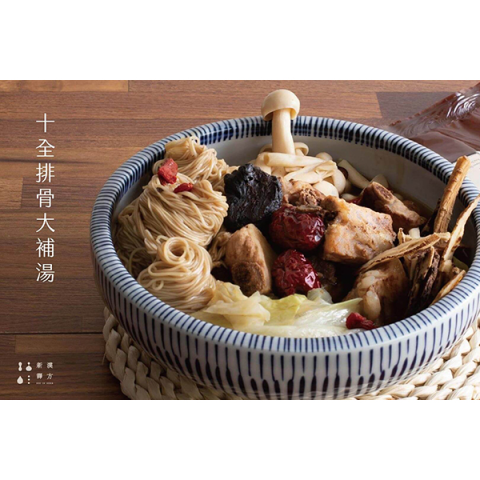

| Product name | Shi Quan Da Bu Tang |
|---|---|
| Descripción | Discomfort caused by qi and blood deficiency, such as fatigue, low energy, easy exhaustion, and weakened immunity., Conditions involving a weak constitution, post-illness debility, or postoperative anemia., Patients with yang deficiency and cold patt |
| Price | MXN$450 |
| Order quantity |
|
| Sum |
Shi Quan Da Bu Tang
(十全大补汤 Decoction of Grand Tonification)
1. Prescription 1
Ingredients
All herbs in equal parts:
- 人参 – Ren Shen, ginseng root
- 肉桂(去粗皮,不见火) – Rou Gui, cinnamon bark (coarse bark removed, not directly exposed to fire)
- 川芎 – Chuan Xiong, Szechuan lovage rhizome
- 地黄(洗酒,蒸,焙) – Di Huang, rehmannia root (washed with wine, steamed and dried)
- 茯苓(焙) – Fu Ling, poria (lightly dry-baked)
- 白术(焙) – Bai Zhu, white atractylodes rhizome (dry-baked)
- 甘草(炙) – Gan Cao, honey-fried licorice root
- 黄蓍 / 黄耆(去芦) – Huang Qi, astragalus root (root crown removed)
- 当归(洗,去芦) – Dang Gui, Chinese angelica root (washed, root crown removed)
- 白芍药 / 白芍 – Bai Shao, white peony root
Note:
川芎 is listed twice in the original; clinically it is used once at the same dose as the other ingredients.
Preparation
Grind the above ten ingredients into a coarse powder.
Functions & indications
Indicated for men and women with various deficiency disorders:
- General deficiency and insufficiency
- “Five taxations and seven injuries” (chronic overstrain and internal damage)
- Poor appetite, not wanting to eat
- Prolonged illness with deficiency and emaciation
- Recurrent tidal fever
- Qi counterflow attacking the bones and spine, resulting in stiffness and pain
- Nocturnal emission with dreams
- Sallow, lusterless facial complexion
- Weakness of the legs and knees
- Any post-illness condition where the qi is not restored to former strength
- Emotional distress, worry and overthinking which disturb and deplete qi and blood
- Panting and cough, focal distention in the chest and epigastrium
- Weakness of the spleen and kidney qi
- Vexation and heat in the five centers (palms, soles, chest)
This formula is warm in nature but not excessively hot, a balanced and effective tonic. It:
- Tonifies qi and nourishes the spirit
- Awakens the spleen and relieves thirst
- Supports the upright and dispels evil
- Warms and strengthens the spleen and kidneys
Its efficacy is extensive and cannot be completely described in full.
Dosage & administration
- Each dose: 2 large qian (approx. 6 g if 1 qian ≈ 3 g)
- Decoction with: 1 cup of water
- Add:
- 生姜3片 – 3 slices fresh ginger (Sheng Jiang)
- 枣子2个 – 2 jujube fruits (Da Zao)
- 生姜3片 – 3 slices fresh ginger (Sheng Jiang)
- Boil until 7/10 of the original volume remains.
- Take warm, at any time of day, without strict time restriction.
Source
Song dynasty, “Tai Ping Hui Min He Ji Ju Fang” (《宋·太平惠民和剂局方》).
2. Prescription 2
Other names
- 十全饮 – Shi Quan Yin
- 十补汤 – Shi Bu Tang
(Both from “Tai Ping Hui Min He Ji Ju Fang,” juan 5; and “Ren Zhai Zhi Zhi,” juan 15.)
Ingredients
All herbs in equal parts:
- 人参 – Ren Shen, ginseng root
- 肉桂(去粗皮,不见火) – Rou Gui, cinnamon bark (coarse bark removed, not directly fired)
- 川芎 – Chuan Xiong, Szechuan lovage rhizome
- 地黄(洗,酒蒸,焙) – Di Huang, rehmannia root (washed, steamed in wine, then dried)
- 茯苓(焙) – Fu Ling, poria (dry-baked)
- 白术(焙) – Bai Zhu, white atractylodes rhizome (dry-baked)
- 甘草(炙) – Gan Cao, honey-fried licorice root
- 黄耆(去芦) – Huang Qi, astragalus root (root crown removed)
- 川当归(洗,去芦) – Dang Gui, Chinese angelica root (washed, root crown removed)
- 白芍 – Bai Shao, white peony root
Preparation
Cut and grind the ten herbs into a fine powder.
Functions
- Warms and tonifies qi and blood.
Indications
For patterns of deficiency of qi and blood and multiple vacuity disorders, such as:
- General deficiency and insufficiency
- Five taxations and seven injuries
- Poor appetite, failure to take food and drink
- Long-term illness with deficiency and emaciation
- Recurrent tidal fever
- Qi counterflow attacking the spine with stiffness and pain
- Nocturnal emission with dreams
- Sallow facial complexion
- Weakness of the legs and knees
- Post-illness qi not recovering to former level
- Worry and overthinking injuring qi and blood
- Panting and cough, focal distention in the chest and epigastrium
- Spleen and kidney qi deficiency, vexation and heat in the five centers
- Non-healing sores and ulcers
- Uterine bleeding and leakage (崩漏) in women
Dosage & administration
- Each dose: 6 g of powder
- Decoction with 150 ml water
- Add 3 slices of fresh ginger and 2 jujubes
- Boil down to about 100 ml, take warm, at any time of day.
Notes
This formula consists of:
- Si Jun Zi Tang (四君子汤, Four Gentlemen Decoction) to tonify qi
- Si Wu Tang (四物汤, Four-Substance Decoction) to nourish blood
- Plus Huang Qi (Astragalus) and Rou Gui (Cinnamon bark).
Thus:
- The Four Gentlemen strongly tonify qi.
- The Four Substances nourish and enrich blood.
- Huang Qi further boosts qi and raises yang.
- Rou Gui gently warms and unblocks to assist yang and move qi and blood.
Together they more powerfully tonify both qi and blood.
Because the formula is warm in nature, it is particularly suitable for patterns of qi and blood deficiency with a tendency toward internal cold and yang deficiency.
Source
“Tai Ping Hui Min He Ji Ju Fang,” juan 5.
3. Standard Modern Composition (Formula 3)
Ingredients (common modern dosage example)
- 当归 10 g – Dang Gui, Chinese angelica root
- 川芎 5 g – Chuan Xiong, Szechuan lovage rhizome
- 白芍 10 g – Bai Shao, white peony root
- 熟地黄 10 g – Shu Di Huang, prepared rehmannia root
- 人参 10 g – Ren Shen, ginseng root
- 白术 10 g – Bai Zhu, white atractylodes rhizome
- 茯苓 10 g – Fu Ling, poria
- 炙甘草 5 g – Zhi Gan Cao, honey-fried licorice root
- 黄芪 10 g – Huang Qi, astragalus root
- 肉桂 3 g – Rou Gui, cinnamon bark
Administration
- Usually decocted in water and taken as a tangji (decoction).
- The original text uses equal-part raw herbs; in modern practice, the above is a typical herb-slice dosage.
- Pills (wan): 6–9 g per dose, 2–3 times daily.
- Paste / syrup (gao): 15 g per dose, twice daily.
Main actions
- Warmly tonifies qi and blood.
Primary indications
- Qi and blood deficiency
- Consumptive fatigue with cough and dyspnea
- Pale complexion
- Weakness of the legs and knees
- Nocturnal emission
- Uterine bleeding / abnormal uterine bleeding, irregular menstruation
- Non-healing sores, ulcers not closing
- Pale tongue, thin and weak pulse
Clinical uses (modern)
Commonly applied to:
- Adverse reactions after chemo-radiotherapy in malignant tumors
- Anemia
- Consumptive fatigue
- Non-healing sores and ulcers
- Post-fracture limb swelling after orthopedic surgery
- Raynaud’s syndrome
- Urinary incontinence
- Postpartum body pain
- Hypotension (low blood pressure)
- Pubertal menstrual irregularity, etc.
4. Selected Clinical Applications (summary of the listed studies)
- Reducing chemotherapy toxicity and side effects
- 92 patients with malignant tumors receiving chemotherapy were treated with Shi Quan Da Bu Tang; 90 in control received chemotherapy alone.
- Result: The decoction reduced systemic and gastrointestinal toxicity and alleviated leukocyte decline.
- Source: Journal of Traditional Chinese Medicine (《中医药学刊》), 2004, Issue 4.
- 92 patients with malignant tumors receiving chemotherapy were treated with Shi Quan Da Bu Tang; 90 in control received chemotherapy alone.
- Renal anemia
- 54 cases of renal anemia randomly divided into control and treatment groups (27 each).
- Control: erythropoietin during dialysis plus iron, folic acid, and vitamin B1.
- Treatment: same as control plus modified Shi Quan Da Bu Tang for 3 months.
- Result: Hemoglobin (Hb) and hematocrit (Hct) increased significantly more in the treatment group.
- Source: Journal of Clinical Traditional Chinese Medicine (《中医临床研究》), 2012, Issue 9.
- 54 cases of renal anemia randomly divided into control and treatment groups (27 each).
- Thromboangiitis obliterans (Buerger’s disease), gangrene stage
- 10 patients treated with combinations of Shi Quan Da Bu Tang, Dang Gui Si Ni Tang, and Si Miao Yong An Tang (all modified as appropriate).
- Result: 7 cured, 2 markedly improved, 1 ineffective; total effective rate 90%.
- Source: Traditional Chinese Medicine Research (《中医药研究》), 1999, Issue 5.
- 10 patients treated with combinations of Shi Quan Da Bu Tang, Dang Gui Si Ni Tang, and Si Miao Yong An Tang (all modified as appropriate).
- Postoperative wound healing after anal abscess and anal fistula surgery
- Treatment group (69 cases): modified Shi Quan Da Bu Tang orally, plus antibiotics, herbal sitz baths, and external Sheng Ji Gao / Sheng Ji San dressings.
- Control group (69 cases): same external treatments and antibiotics, without Shi Quan Da Bu Tang.
- Result:
- Mean healing time: treatment group 21.5 ± 3.5 days, control group 27.5 ± 3.5 days.
- Treatment group had faster subsiding of swelling, less exudation, quicker healing, no excessive granulation or secondary bleeding.
- Mean healing time: treatment group 21.5 ± 3.5 days, control group 27.5 ± 3.5 days.
- Source: Jilin Journal of Traditional Chinese Medicine (《吉林中医药》), 2012, Issue 2.
- Treatment group (69 cases): modified Shi Quan Da Bu Tang orally, plus antibiotics, herbal sitz baths, and external Sheng Ji Gao / Sheng Ji San dressings.
- Post-fracture limb swelling after orthopedic surgery
- Both groups received routine care and intravenous sodium aescinate (七叶皂苷) from postoperative day 3.
- Treatment group additionally took Shi Quan Da Bu Tang orally; control group did not.
- Each group: 50 cases, course: 12 days.
- Result: From day 7 of treatment, limb swelling in the treatment group subsided more markedly than in the control group.
- Source: Heilongjiang Journal of Traditional Chinese Medicine (《黑龙江中医药》), 2013, Issue 2.
- Both groups received routine care and intravenous sodium aescinate (七叶皂苷) from postoperative day 3.
- Raynaud’s syndrome
- 44 patients differentiated into:
- Blood deficiency with cold congealing
- Yang deficiency with cold congealing
- Qi deficiency with blood stasis
- Loss of nourishment in the extremities
- Blood stasis with toxic heat
- Blood deficiency with cold congealing
- Treated respectively with modified Dang Gui Si Ni Tang, Yang He Tang, Huang Qi Gui Zhi Wu Wu Tang, Shi Quan Da Bu Tang, and Si Miao Yong An Tang.
- Efficacy criteria:
- Clinically cured: no recurrence ≥ 1 year
- Marked effect: recurrence after > 6 months
- Effective: recurrence after > 3 months
- Ineffective: recurrence within 3 months
- Clinically cured: no recurrence ≥ 1 year
- Results: 25 cured, 7 markedly effective, 8 effective, 4 ineffective.
- Source: Heilongjiang Journal of Traditional Chinese Medicine (《黑龙江中医药》), 2009, Issue 2.
- 44 patients differentiated into:
- Stress urinary incontinence (women)
- 8 female patients treated with modified Shi Quan Da Bu Tang for 55 days.
- Result:
- 2 cured (urinary incontinence basically controlled)
- 4 markedly effective (incontinence improved from grade II to grade I)
- 2 improved (symptoms alleviated)
- 2 cured (urinary incontinence basically controlled)
- Source: Straits Medicine (《海峡医学》), 1997, Issue 1.
- 8 female patients treated with modified Shi Quan Da Bu Tang for 55 days.
- Postpartum body pain
- 50 patients with postpartum body pain treated with Shi Quan Da Bu Tang plus Jing Jie (荆芥).
- Result: 2 lost to follow-up; among the remaining 48: 36 cured, 10 effective, 2 ineffective; total effective rate 95.8%.
- Source: Hebei Journal of Traditional Chinese Medicine (《河北中医》), 2012, Issue 9.
- 50 patients with postpartum body pain treated with Shi Quan Da Bu Tang plus Jing Jie (荆芥).
- Hypotension (low blood pressure)
- Modified Shi Quan Da Bu Tang used to treat hypotension.
- Results:
- Marked effect: 114 cases (67.9%)
- Effective: 48 cases (28.6%)
- Ineffective: 6 cases (3.6%)
- Total effective rate 96.5%.
- Marked effect: 114 cases (67.9%)
- Source: Chinese Journal of Information on Traditional Chinese Medicine (《中国中医药信息杂志》), 1998, Issue 1.
- Modified Shi Quan Da Bu Tang used to treat hypotension.
- Pubertal menstrual irregularity
- 50 cases treated with Shi Quan Da Bu Tang, compared with Xiao Chai Hu Tang as a control; observation period 2 years.
- Results:
- Shi Quan Da Bu Tang: 24 cured, 15 markedly effective, 10 effective, 1 ineffective; cure + marked-effect rate 78%.
- Xiao Chai Hu Tang: 20 cured, 12 markedly effective, 17 effective, 1 ineffective; cure + marked-effect rate 64%.
- Shi Quan Da Bu Tang: 24 cured, 15 markedly effective, 10 effective, 1 ineffective; cure + marked-effect rate 78%.
- Source: Shaanxi Journal of Traditional Chinese Medicine (《陕西中医》), 2011, Issue 7.
- 50 cases treated with Shi Quan Da Bu Tang, compared with Xiao Chai Hu Tang as a control; observation period 2 years.
5. Formula Analysis
Shi Quan Da Bu Tang is primarily used for qi and blood deficiency with generalized vacuity.
- Core is Ba Zhen Tang (八珍汤) – a combination of
- Si Jun Zi Tang (Four Gentlemen):
- 人参 (Ren Shen, ginseng root)
- 白术 (Bai Zhu, white atractylodes rhizome)
- 茯苓 (Fu Ling, poria)
- 炙甘草 (Zhi Gan Cao, honey-fried licorice root)
→ Tonifies qi and strengthens the spleen.
- 人参 (Ren Shen, ginseng root)
- Si Wu Tang (Four Substances):
- 熟地黄 (Shu Di Huang, prepared rehmannia root)
- 当归 (Dang Gui, Chinese angelica root)
- 白芍 (Bai Shao, white peony root)
- 川芎 (Chuan Xiong, Szechuan lovage rhizome)
→ Nourishes and invigorates blood.
- 熟地黄 (Shu Di Huang, prepared rehmannia root)
- Si Jun Zi Tang (Four Gentlemen):
- Adding:
- 黄芪 (Huang Qi, astragalus root) – strongly boosts qi, raises yang, helps consolidate the exterior and promote tissue regeneration.
- 肉桂 (Rou Gui, cinnamon bark) – warmly unblocks channels, assists yang, promotes the circulation of qi and blood.
- 黄芪 (Huang Qi, astragalus root) – strongly boosts qi, raises yang, helps consolidate the exterior and promote tissue regeneration.
Thus, the formula:
- Strongly tonifies both qi and blood
- Warms yang and dispels cold
- Particularly suitable for qi–blood deficiency with cold extremities, pale complexion, fatigue, and weak limbs
Clinical differentiation key points:
- Qi and blood deficiency signs: pale face, fatigue, shortness of breath, palpitations, dizziness
- Weak legs and knees, cold limbs, preference for warmth
- Pale tongue, thin and weak pulse
Adjustments (according to symptoms in the original text)
- Poor appetite / food stagnation:
- Omit Shu Di Huang
- Add charred hawthorn (Jiao Shan Zha), charred Shenqu (Jiao Liu Qu), Sha Ren (amomum) and Dou Kou (cardamom) to promote digestion.
- Omit Shu Di Huang
- Chest oppression / chest tightness:
- Add Chen Pi (aged tangerine peel), Mu Xiang (costus root), Gua Lou (trichosanthes fruit) to regulate qi and open the chest.
- Add Chen Pi (aged tangerine peel), Mu Xiang (costus root), Gua Lou (trichosanthes fruit) to regulate qi and open the chest.
- Marked cold extremities and aversion to cold:
- Increase the dosage of Rou Gui to further warm yang and dispel cold.
- Increase the dosage of Rou Gui to further warm yang and dispel cold.
6. Modern Pharmacological Research (summary)
Modern studies show that Shi Quan Da Bu Tang has the following actions:
- Enhances immune function
- Promotes the production of specific antibodies
- Activates the complement system
- Activates macrophages
- Promotes the production of specific antibodies
- Antitumor activity
- Exhibits direct anticancer effects in some experimental models
- Enhances the anticancer effects of chemotherapeutic drugs
- Significantly reduces the toxicity and side effects of chemotherapy and radiotherapy
- Helps prevent and treat leukopenia and other chemo-/radiotherapy-related adverse effects
- Exhibits direct anticancer effects in some experimental models
These findings are consistent with its traditional use as a major formula for strengthening qi and blood, supporting the upright qi, and aiding recovery from debilitating illness or heavy treatments.
7. Formula Mnemonic (fang ge)
Original mnemonic (translated):
十全大补最有灵,
四物地芍当归芎,
人参白术苓炙草,
温补气血芪桂行。
Meaning in English:
- “Shi Quan Da Bu is the most effective;
- Four Substances: Shu Di, Bai Shao, Dang Gui, Chuan Xiong;
- Plus Ren Shen, Bai Zhu, Fu Ling, Zhi Gan Cao;
- Warmly tonifying qi and blood, with Huang Qi and Rou Gui moving and guiding them.”
If you’d like, I can next:
- Extract just the herb list as a bilingual table (Chinese–Pinyin–Latin/English) for use in your database, or
- Compare Shi Quan Da Bu Tang with Ba Zhen Tang / Si Jun Zi Tang / Si Wu Tang side-by-side for teaching materials.


