
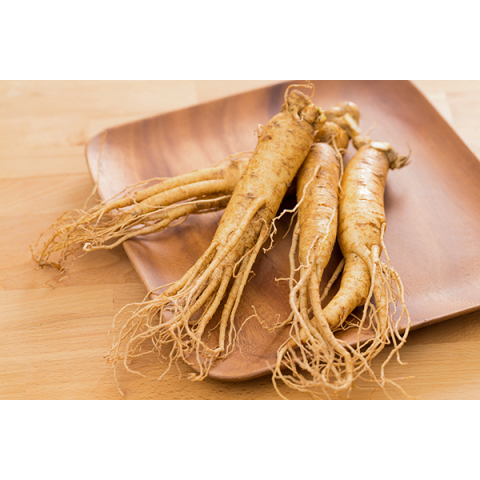

| Product name | Ginseng |
|---|---|
| Descripción | Deficiency caused by overwork, reduced vitality, poor appetite, fatigue, vomiting, diarrhea, cough, asthmatic dyspnea, palpitations, forgetfulness, dizziness, headache, impotence, frequent urination, diabetes, uterine bleeding in women, chronic convu |
| Price | MXN$500 |
| Order quantity |
|
| Sum |
Ginseng
(人参 Rén Shēn)
Aliases (别名 / Other Names)
- 人衔 (Rén Xián), 鬼盖 (Guǐ Gài) — Shén Nóng Běn Jīng (The Classic of Materia Medica)
- 土精 (Tǔ Jīng), 神草 (Shén Cǎo), 黄参 (Huáng Shēn), 血参 (Xuè Shēn) — Wú Pǔ Běn Cǎo
- 地精 (Dì Jīng) — Guǎng Yǎ
- 百尺杵 (Bǎi Chǐ Chǔ) — Běn Cǎo Tú Jīng
- 海腴 (Hǎi Yú), 金井玉阑 (Jīn Jǐng Yù Lán), 孩儿参 (Hái’ér Shēn) — Běn Cǎo Gāng Mù (Compendium of Materia Medica)
- 棒棰 (Bàng Chuí) — Major Medicinal Materials of Liaoning
Source (出处)
《本经》 / Shén Nóng Běn Jīng (The Classic of Materia Medica)
Botanical Origin (来源)
Ginseng refers to the root of Panax ginseng C.A.Mey., a plant of the family Araliaceae (五加科).
1) Cultivated Ginseng (园参 / Yuán Shēn)
- Harvested between September–October from plants older than 6 years.
- Carefully dug to avoid breaking roots.
- Fresh product is called “Garden Ginseng Fresh Root” (园参水子).
- Fresh transplanted wild ginseng is called “Transplanted Wild Ginseng Fresh Root” (移山参水子).
2) Wild Ginseng (野山参 / Yě Shān Shēn)
- Harvested between May–September.
- Soil loosened with a bone needle, roots gently lifted to avoid damage.
- Fresh product called “Wild Ginseng Fresh Root” (野山参水子).
Morphology (原形态 / Botanical Description)
- A perennial herb up to 60 cm tall.
- Taproot thick, fleshy, cylindrical; may branch.
- Upper bifurcation → called “Spirit Body (灵体)” or “Horizontal Body (横体)”
- Lower branching or unbranched → “Clumsy Body (笨体)” or “Stout Body (顾体)”
- Upper bifurcation → called “Spirit Body (灵体)” or “Horizontal Body (横体)”
- Numerous long fibrous roots with warty nodules (珍珠点 “pearl points”).
- Stem erect, smooth, cylindrical, green.
Leaves:
- Verticillate at the stem apex; number increases with age:
- Year 1: 1 trifoliate leaf
- Year 2: 1 palmate leaf with 5 leaflets
- Year 3: 2 × 5 leaflets
- Year 4: 3 whorls
- Eventually up to 6 whorls
- Year 1: 1 trifoliate leaf
- Leaflets ovate/obovate; edges serrated.
Flowers:
- Umbel of greenish-yellow flowers on a 7–20 cm peduncle.
- Flowers bisexual or male.
- Season: June–July
Fruits:
- Berry-like drupes, kidney-shaped, turning bright red when ripe.
- Seeds: white, flattened-ovoid.
- Fruit season: July–September
Habitat & Distribution (生境分布)
Grows in dense forests of:
- Heilongjiang
- Jilin
- Liaoning
- Northern Hebei
Wild = Wild Mountain Ginseng (野山参)
Cultivated = Garden Ginseng (园参)
Transplanted = “Transplanted Mountain Ginseng (移山参)”
Medicinal parts also include:
- Ginseng Rhizome (人参芦 / Ginseng Caudex)
- Adventitious Roots (人参条 / Ginseng Rootlets)
- Fibrous Roots (人参须 / Ginseng Fibers)
- Ginseng Leaves (人参叶)
- Ginseng Flower (人参花)
- Ginseng Fruit (人参子)
(All have their own entries.)
Macroscopic Characteristics (性状)
1) Garden Ginseng (园参)
Also called Seedling Ginseng (秧参).
- Taproot cylindrical, pale yellow, with transverse rings at upper part.
- Rhizome 2–6 cm long with bowl-shaped rhizome scars.
- 2–6 branch roots; long fibrous roots with pearl-like warts.
Main Commercial Types (因加工方法不同):
(1) Red Ginseng (红参 / Hóng Shēn)
- Length 5–20 cm, diameter 0.7–2 cm
- Surface reddish-brown, semi-translucent
- Strong longitudinal wrinkles
- Cross-section horny, reddish, with lighter core
- Aroma fragrant, taste slightly bitter
(2) “Edge-Strip” Ginseng (边条参)
Similar to red ginseng but longer rhizome, longer main body, longer branch roots.
(3) Sugar Ginseng (糖参 / Táng Shēn)
- Length 3.5–12 cm, diameter 0.6–2 cm
- Yellowish-white surface with ring patterns
- Powdery cross-section, yellowish-white
- Sweet slightly bitter taste
(4) White Ginseng (白人参 / Bái Rén Shēn)
Similar to sugar ginseng but shape better; resembles wild ginseng.
(5) Sun-Dried Ginseng (生晒参 / Shēng Shài Shēn)
- Length 3–10 cm, diameter 0.3–2 cm
- Yellowish surface with dark wrinkles
- Fibers removed
- White cross-section, brittle, fragrant, bitter
- With complete rhizome + fibers = “Whole-Fibers Sun-Dried Ginseng” (全须生晒参)
(6) Peeled Dried Ginseng (白干参)
- Surface yellowish or off-white
- Shallow wrinkles visible
- Similar to sun-dried ginseng
(7) Skin-Pinched Ginseng (掐皮参)
- Length 6–15 cm, diameter 1.2–2.5 cm
- Yellow surface with man-made dimples
- Branch roots tied like “ox-tail”
- Taste sweet, slightly bitter
(8) “Strong” Ginseng (大力参)
- Length 5–15 cm
- Semi-translucent yellow root, prominent wrinkles
- Hard and brittle, shiny horn-like cross-section
- Bitter taste
Quality Evaluation
Best = long body, thick branches, long rhizome
Inferior = thin branches, short rhizome, high sugar content
Major producing areas: Jilin > Liaoning > Yanbian Korean Autonomous Prefecture
2) Wild Ginseng (野山参 / Yě Shān Shēn)
- Taproot short and thick; often with 2 major branch roots resembling a human body
- Fine deep transverse rings at upper part
- Rhizome 3–9 cm, twisted upper part known as “Goose-Neck Rhizome (雁脖芦)”
- Lower rhizome smooth = “Round Rhizome (圆芦)”
- Sparse, long, flexible fibrous roots with pearl dots
- Entire root pale yellow-white, glossy, fragrant, slightly sweet-bitter
Commercial types identical to garden ginseng:
- Sun-dried ginseng
- Sugar ginseng
- Skin-pinched ginseng
Best quality =
- Big branches
- Abundant interior substance
- Fine striations
- Long rhizome with dense rhizome bowls
- Presence of round rhizome + pearl dots
Major producing areas: Jilin, Liaoning, Heilongjiang
3) Transplanted Mountain Ginseng (移山参 / Yí Shān Shēn)
- Resembles wild ginseng
- Lower taproot more swollen
- Coarser and lighter root striations
- Fewer pearl dots
- Commercial forms same as wild ginseng
4) Korean Ginseng (朝鲜人参 / Cháoxiǎn Rén Shēn / Korean Ginseng)
Also called 高丽参 (Gāolì Shēn).
Two commercial types:
(1) Korean Red Ginseng (朝鲜红参)
- Processing same as Chinese red ginseng
- Robust root, with double “horseshoe rhizomes”
- Surface reddish-brown, ridged
- Hard and heavy
- Horny, shiny cross-section with chrysanthemum pattern
- Strong aroma, sweet slightly bitter taste
(2) Korean White Ginseng (朝鲜白参)
- Cylindrical root
- Yellow-white surface with fine brownish lines
- Most fibrous roots removed
- Light, spongy texture
- Slight aroma, sweet slightly sour taste
Processing (炮制 · Pào Zhì)
- Sugar-processed Ginseng (糖参类 / Sugar-ginseng type):
Remove the rhizome head (芦头 lú tóu) and cut into sections for use. - Red Ginseng (红参类 / Red-ginseng type):
Remove the rhizome head, cut into sections, or wrap in a damp cloth to soften, then slice thinly and dry.
Channel Entry (归经 · Guī Jīng)
Enters the Spleen and Lung meridians.
- Ben Cao Yan Yi Bu Yi 《本草衍义补遗》: “Enters the Hand-Taiyin (Lung).”
- Ben Cao Hui Yan 《本草汇言》: “Enters the Lung and Spleen meridians.”
- Yao Pin Hua Yi 《药品化义》: “Enters the Spleen, Stomach, and Lung meridians.”
Properties & Flavor (性味 · Xìng Wèi)
Flavor: sweet and slightly bitter, Nature: warm
- Ben Jing 《本经》: “Sweet in flavor, slightly cold in nature.”
- Bie Lu 《别录》: “Slightly warm, non-toxic.”
- Ben Cao Bei Yao 《本草备要》:
- Raw ginseng: sweet, bitter, slightly cool
- Prepared ginseng: sweet, warm
- Raw ginseng: sweet, bitter, slightly cool
Precautions (注意 · Zhù Yì)
Contraindicated in excess patterns and heat patterns.
- Ben Cao Jing Ji Zhu 《本草经集注》: “Poria (茯苓 Fú Líng) acts as envoy; incompatible with sow-thistle root; antagonistic with Veratrum (藜芦 Lí Lú).”
- Yao Dui 《药对》: “Fears Five-Spice Resin (五灵脂 Wǔ Líng Zhī); incompatible with Gleditsia (皂荚 Zào Jiá) and black soybean; agitates Purple Quartz (紫石英 Zǐ Shí Yīng).”
- Yao Xing Lun 《药性论》: “Iris lactea (马蔺 Mǎ Lìn) acts as envoy; dislikes briny minerals.”
- Yi Xue Ru Men 《医学入门》: “Use cautiously in yin-deficient fire-cough and hemoptysis.”
- Yue Chi Ren Shen Zhuan 《月池人参传》: “Avoid iron utensils.”
- Yao Pin Hua Yi 《药品化义》:
“If spleen–stomach heat-excess, lung heat with phlegm, fresh hemorrhage, chest oppression, esophageal obstruction, constipation, parasites, or accumulations, do not use ginseng.”
Functions & Indications (功能主治 · Gōng Néng Zhǔ Zhì)
Greatly tonifies primordial qi (大补元气), prevents collapse, generates fluids, calms the spirit.
Indicated for:
- fatigue, deficiency damage
- poor appetite, lethargy
- rebellious stomach qi, vomiting
- chronic diarrhea
- deficiency cough, shortness of breath
- spontaneous sweating, collapse
- palpitations, forgetfulness
- dizziness, headache
- impotence, frequent urination
- wasting-thirst (diabetes-like conditions)
- women’s metrorrhagia
- pediatric chronic convulsions
- all qi–blood–body-fluid deficiency patterns
Classic citations
- 《本经》:
“Tonifies the five zang organs, calms the spirit, stops palpitations, expels evil qi, brightens the eyes, opens the heart, enhances intelligence.” - 《别录》:
“Warms cold in the intestines and stomach, treats abdominal fullness and pain, vomiting of cholera, harmonizes the center, stops thirst, opens channels, breaks masses, improves memory.” - 《药性论》:
“Treats organ-qi deficiency, five-taxations, seven-injuries, emaciation, vomiting, cholera, phlegm in chest, lung atrophy, epilepsy, cold rebellious qi, post-febrile poor appetite, dream-disturbance.” - 《日华子本草》:
“Harmonizes the middle and regulates qi, promotes digestion and appetite.” - 《珍珠囊》:
“Nourishes blood, tonifies Stomach qi, drains Heart fire.” - 《医学启源》:
“Treats Spleen–Stomach yang deficiency and Lung qi insufficiency; tonifies while draining internal fire.” - 《滇南本草》:
“Treats yin–yang dual deficiency and Lung qi weakness.” - 《本草蒙筌》:
“Calms asthma, unblocks blood vessels, drains yin-fire, nourishes primordial yang.” - 《纲目》:
“Treats all deficiency disorders for both men and women.”
Dosage & Administration (用法用量)
- Decoction (boiled): 0.5–3 qian
- Large dose: 0.3–1 liang
- Also used in syrups, pills, powders.
Formulas (复方 · Fù Fāng)
(All herbal names include English equivalents.)
Below is a complete translation of each formula exactly as in the original:
① Four Gentlemen Decoction (四君子汤)
For: Qi deficiency of Ying & Wei, poor appetite, abdominal fullness, diarrhea, vomiting.
Ingredients (equal amounts):
- 人参 Ginseng Root (Ren Shen)
- 白术 Atractylodes macrocephala (Bai Zhu)
- 茯苓 Poria (Fu Ling)
- 甘草(炙) Honey-fried Licorice Root (Zhi Gan Cao)
Powder and take 2 qian per dose.
② Warm Stomach Decoction (温胃煮散)
Indications: Stomach deficiency cold, epigastric fullness.
Ingredients:
- 人参末 Ginseng powder 2 qian
- 生附子末 Raw Aconite (Fu Zi) powder 0.5 qian
- 生姜 Fresh Ginger (Sheng Jiang) 1 fen
Boil and drink warm.
③ Chronic Lung Deficiency Cough
- 人参 Ginseng 2 liang
- 鹿角胶 Deer Antler Glue (Lu Jiao Jiao) 1 liang
Take 3 qian with Peppermint & Fermented Soy decoction.
④ Ren Shen Gecko Powder (人参蛤蚧散)
Treats chronic lung disorders, pus-blood sputum, swelling.
Ingredients include:
- 蛤蚧 Gecko
- 杏仁 Apricot Kernel (Xing Ren)
- 甘草 Licorice
- 知母 Anemarrhena
- 桑白皮 Mulberry Root Bark
- 人参 Ginseng
- 茯苓 Poria
- 贝母 Fritillaria
Powder and take like tea daily.
⑤ Ginseng + Prepared Aconite Decoction
For yang deficiency, short breath, spontaneous sweating.
- 人参 Ginseng 5 qian
- 熟附子 Processed Aconite 1 liang
⑥ For Heart-Qi Deficiency and Palpitations
Pork kidney + 人参 Ginseng, 当归 Angelica Sinensis, cooked and eaten.
⑦ Ding Zhi Wan (定志丸)
For emotional instability, fear, palpitations, memory loss.
Ingredients:
- 远志 Polygala Root (Yuan Zhi)
- 菖蒲 Acorus (Shi Chang Pu)
- 人参 Ginseng
- 白茯苓 Poria
Honey pills coated with cinnabar.
⑧ Yu Hu Wan (玉壶丸)
For excessive thirst (Xiao Ke):
- 人参 Ginseng
- 瓜蒌根 Trichosanthes Root (Tian Hua Fen)
Equal parts, honey pills.
⑨ Xiao Ke Thirst
Ginseng powder + egg white.
⑩ Du Shen Tang (独参汤)
For collapse after bleeding:
- 大人参 Large Ginseng
- 枣 Jujube
⑾ Severe Bleeding from Emotional Damage
- 人参(焙) Roasted Ginseng
- 侧柏叶 Biota Leaves
- 荆芥穗 Schizonepeta Spike
Powder and take with water.
⑿ Childhood ocular deviation after seizures
Human Ginseng + Donkey-Hide Gelatin.
⒀ Intractable diarrhea (噤口痢)
Ginseng + Lotus Seed.
⒁ Ren Shen Tang (人参汤, Golden Chamber)
For chest bi, chest fullness, qi blockage.
- 人参 Ginseng
- 甘草 Licorice
- 干姜 Dried Ginger
- 白术 Atractylodes
⒂ Cholera with vexation
桂心 Cinnamon Heart Bark + Ginseng.
⒃ Deficiency Malaria
Ginseng + Realgar pills.
⒄ Pregnancy nausea with cold stomach
Ginseng + Dried Ginger pills.
Clinical Applications (临床应用)
1. Emergency use
Large doses (0.3–1 liang) or ginseng injection for:
- cardiogenic shock
- severe collapse
Combined with Aconite to rescue yang-collapse.
2. Cardiovascular diseases
Useful for:
- hypertension
- coronary sclerosis
- angina
Small dose raises BP; large dose lowers BP.
3. Stomach & liver diseases
Improves appetite in chronic gastritis, reduces symptoms, may help prevent chronic hepatitis progression.
4. Diabetes
Improves general condition; may lower glucose in mild cases; reduces insulin dosage in some patients.
5. Psychiatric disorders
May help psychasthenic or depressive-type disorders; improves subjective symptoms.
6. Neurasthenia
Improves fatigue, headache, insomnia; increases physical capacity.
7. Impotence
Enhances gonadal function; effective in neuropathic or premature-ejaculation types.
8. Other effects
Improves vision and dark adaptation; used in many combined therapies.
Avoid in heat-excess or sudden qi block leading to bleeding or throat dryness.
Processing Methods (制法)
1. Red-ginseng Type (红参类)
Steam fresh garden ginseng until yellow and translucent, then dry.
Products: red ginseng, strip-ginseng.
2. Sugar-ginseng Type (糖参类)
Parboil, sulfur-fumigate, needle-pierce, soak in sugar syrup twice, dry.
Products: white ginseng, sugar-ginseng.
3. Sun-dried Ginseng (生晒参类)
Wash, sun-dry, sulfur-fumigate, dry.
Products: sun-dried ginseng, full-beard ginseng, white-dried ginseng.
4. Other Types
(1) Skinned Ginseng (掐皮参)
Multiple hot-water blanching, needle-piercing, thin sugar soaking, light roasting, peel separation.
(2) Strong Ginseng (大力参)
Brief blanching then sun-drying.
Storage
Ginseng easily absorbs moisture and exudes sugar (“return-sugar”).
Store in a cool, dry, dark, sealed place, protected from insects.


