
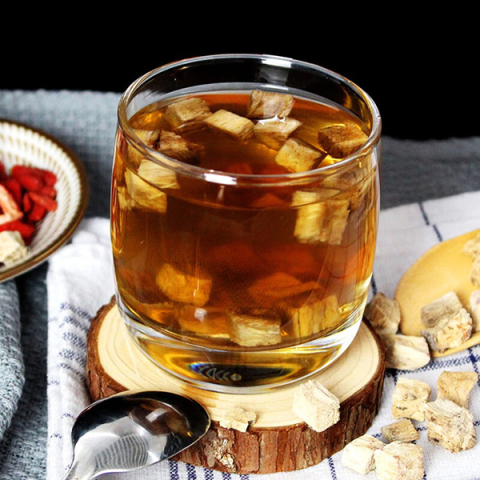

| Product name | Kudzu Root Osmanthus Tea |
|---|---|
| Descripción | Good for relieving colds and reducing fever, alleviating hangovers, easing menopausal symptoms, supporting vascular health and blood pressure regulation, and promoting digestive health. |
| Price | MXN$240 |
| Order quantity |
|
| Sum |
Kudzu Root Osmanthus Tea
(葛根桂花茶 Pueraria Root Osmanthus Tea)
Kudzu Root:
An Essential Medicinal Food for Women
(葛根 女性少不了的药膳佳品 / Pueraria Root: Essential Medicinal Diet for Women)
With the rapid development of modern society, many women face the dual burden of work and family, leading to significant mental and physical stress.
As a result, women in their early 30s may already begin to show early menopausal-like symptoms, such as:
- Facial pigmentation and dark spots
- Menstrual pain (dysmenorrhea)
- Irregular menstruation
- Breast-related disorders
- Osteoporosis
The primary causes are endocrine imbalance and improper or excessive supplementation.
How can these symptoms be improved?
There is a remarkable medicinal and edible plant that provides effective support:
Wild Kudzu Root (野葛根 / Wild Pueraria Root).
It is known as the “guardian herb for women” because it contains extremely high levels of bioactive phyto-compounds:
- Isoflavones (plant-based estrogens)
- Daidzein glycosides
- Puerarin
These components are highly effective for:
- Regulating the endocrine system
- Maintaining healthy estrogen balance in the body
Research indicates that wild kudzu possesses the highest concentration and activity of isoflavones found in plants, with activity measured at 100–1000 times higher than that of soy isoflavones.
Puerarin, a natural glycoside compound, supports:
- Heart and cerebrovascular health
- Ovarian nourishment
- Improved microcirculation
- Activation of natural estrogen secretion
- Delay of female aging
Kudzu Root Osmanthus Tea
(葛根桂花茶 / Pueraria Root Osmanthus Tea)
✔ Drink once daily; can be steeped multiple times.
Ingredients
- Kudzu root (葛根) — 5 g
- Osmanthus flowers (桂花) — 1 g
- “Qiao Mei Flower” (巧梅花 / Plum Blossom type) — 2 blossoms
- Green tea (绿茶) — 1 g
Preparation
- Combine all ingredients.
- Pour boiling water over the mixture and cover.
- Steep for 5 minutes.
- Drink warm.
Effects
- Balances endocrine function
- Improves skin health
- Boosts vitality and energy
Kudzu Root
(葛根 Pueraria lobata)
Kudzu root is the dried root of a leguminous plant widely used for thousands of years in Traditional Medicine in Korea, China, and Japan.
Main Benefits & Uses
✔️ 1. Relieves colds and reduces fever
Helps induce sweating and reduce heat, alleviating:
- Body aches
- Headaches
- Neck and shoulder stiffness
A key herb in the classic formula Ge Gen Tang (葛根汤).
✔️ 2. Hangover relief
Promotes alcohol metabolism and helps reduce:
- Headache
- Thirst
- Discomfort after excessive drinking
✔️ 3. Alleviates menopausal symptoms
Rich in phytoestrogens (especially puerarin), helping improve:
- Hot flashes
- Night sweats
- Insomnia
✔️ 4. Cardiovascular support & blood pressure
Reduces vascular resistance, improves circulation, and may help lower blood pressure.
✔️ 5. Digestive support
Thanks to its natural starch content, it aids in:
- Mild diarrhea
- Poor digestion
Additional Information
- Nature: cool; suitable for people with excess internal heat
- Components: isoflavones, starch, triterpenoids
- Precautions:
- People with cold constitution or frequent diarrhea should avoid excessive consumption
- Due to high phytoestrogen content, not recommended for long-term use in prepubescent girls
- People with cold constitution or frequent diarrhea should avoid excessive consumption
Osmanthus Flowers
(桂花Osmanthus fragrans)
Osmanthus is an evergreen shrub or small tree famous for its intensely sweet fragrance. It is one of China’s “Top Ten Famous Flowers.”
Main Characteristics
✔️ Plant Structure
- Height ranges from 3–5 meters, up to 10 meters
- Opposite leaves, thick and leathery, dark green
✔️ Flowers
- Small clusters blooming in leaf axils
- Four-lobed corolla
- Colors include:
- Creamy white (银桂)
- Yellow (金桂)
- Orange (丹桂)
- Creamy white (银桂)
✔️ Flowering & Fragrance
- Blooms mainly in autumn
- Famous for its incredibly strong scent—called “nine-mile fragrance”
✔️ Main Varieties
- Golden Osmanthus (金桂)
- Silver Osmanthus (银桂)
- Red Osmanthus (丹桂)
- Four-Season Osmanthus (四季桂) — blooms year-round
Qiao Mei Flower
(巧梅花)
“Qiao Mei Hua” commonly refers to Hong Qiao Mei (红巧梅), a dried flower used for herbal teas.
It is not the traditional plum blossom (梅花).
It often refers to floral infusions made from plants like Gomphrena globosa (千日红 / Globe Amaranth).
Characteristics:
- Red or pink in color
- Beautiful and decorative
- Produces a vivid and attractive color when infused
Green Tea
(绿茶 Green Tea)
Green tea is a non-fermented tea, prized for its fresh taste and powerful health benefits.
Famous Chinese Varieties
- West Lake Longjing (西湖龙井)
- Dongting Biluochun (洞庭碧螺春)
- Huangshan Maofeng (黄山毛峰)
- Xinyang Maojian (信阳毛尖)
- Lu’an Guapian (六安瓜片)
- Duyun Maojian (都匀毛尖)
Health Benefits
- Strong antioxidant
- Anti-aging
- Enhances focus
- Aids digestion
- Reduces cholesterol
- Supports cardiovascular health
Brewing Guidelines
- Water temperature: 80–90°C
- Steeping time: 2–3 minutes
- Do not use boiling water directly—it causes bitterness