

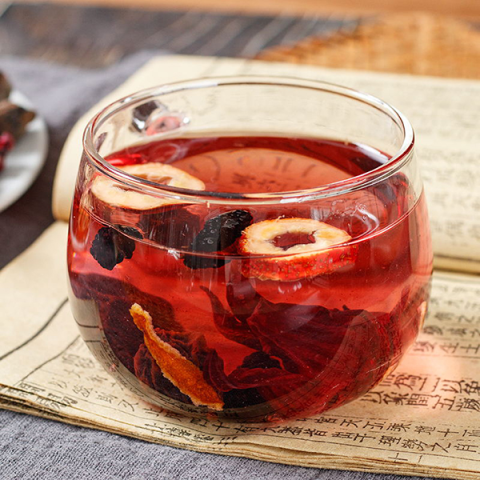

| Product name | Kudzu Rose Tea |
|---|---|
| Descripción | It is effective for regulating hormones, improving blood circulation, and enhancing skin beauty. |
| Price | MXN$240 |
| Order quantity |
|
| Sum |
Kudzu Rose Tea
(葛根玫瑰茶 / Pueraria Root Rose Tea)
Kudzu Root An Essential Medicinal Food for Women
(葛根 女性少不了的药膳佳品 Pueraria Root: Essential Medicinal Diet for Women)
With the rapid development of modern society, many women today shoulder the double burden of career and family. This results in significant psychological and physical stress.
As early as their early thirties, many women may begin to experience symptoms similar to early menopause, such as:
- Facial pigmentation and dark spots (面部色斑)
- Menstrual pain (dysmenorrhea, 痛经)
- Irregular menstruation (月经不调)
- Breast disorders (乳腺疾病)
- Osteoporosis (骨质疏松症)
The main causes are endocrine imbalance and improper or excessive supplementation.
How can these symptoms be improved?
There is a medicinal and edible plant that can help: Wild Kudzu Root (野葛根 / Wild Pueraria Root).
It is known as the “guardian herb for women” because it is rich in highly active phyto-compounds such as:
- Isoflavones (plant-based estrogen)
- Daidzein glycosides
- Puerarin (葛根素)
These compounds are excellent for regulating the endocrine system and maintaining estrogen balance.
Wild kudzu contains one of the highest levels and activities of isoflavones found in plants, with potency 100–1000 times higher than that of soy isoflavones.
Puerarin is a natural glycoside that benefits cardiovascular and cerebrovascular health, improves local microcirculation, nourishes the ovaries, and activates natural estrogen secretion—thereby helping delay female aging.
Below is a medicinal diet that enhances endocrine regulation, estrogen balance, calcium supplementation, menstrual regulation, and overall beauty.
Kudzu Rose Tea
(葛根玫瑰茶 / Pueraria Root Rose Tea)
✔ Drink once a day; can be steeped multiple times.
Ingredients
- Kudzu root (葛根) — 5 g
- Rose petals (玫瑰花) — 2 g
- Black tea (红茶) — 1 g
- Safflower (红花) — 1 g
Instructions
Prepare the tea the same way as Kudzu–Osmanthus Tea:
Pour boiling water over the mixture, cover, and steep before drinking.
Effects
- Regulates hormones
- Promotes blood circulation
- Improves skin beauty
Kudzu Root
(葛根 Pueraria lobata)
Kudzu root is the dried root of the leguminous plant kudzu, a highly valued medicinal herb used for thousands of years in Korea, China, and Japan. In English, it is commonly called kudzu root.
Main Benefits & Uses
✔️ Fever reduction and cold relief
Mildly cooling in nature, kudzu reduces heat and promotes sweating, helping relieve:
- Colds
- High fever
- Headache
- Neck and shoulder stiffness
It is the main ingredient in the famous formula Ge Gen Tang (葛根汤).
✔️ Hangover relief & liver support
Kudzu is excellent for relieving hangovers and supporting liver detoxification.
Its catechin content also contributes to liver health.
✔️ Relief of menopausal symptoms
Rich in phytoestrogens, it helps improve:
- Hot flashes
- Night sweats
- Insomnia
✔️ Cardiovascular health
Improves blood circulation, reduces vascular resistance, and benefits:
- High blood pressure
- Angina
- Other cardiovascular conditions
✔️ Digestive support
Kudzu warms and strengthens yang energy, helping stop diarrhea and relieve digestive issues.
✔️ Antioxidant & anti-inflammatory
Isoflavones in kudzu provide powerful antioxidant and anti-inflammatory effects.
Forms of Use
- Traditional herbal decoctions or pills
- Tea or kudzu juice
- Kudzu starch (powder) extracted from the root, used for cooking or indigestion remedies
Precautions
Because kudzu is cooling, people with cold constitution or chronic diarrhea should avoid excessive intake.
Due to its high phytoestrogen content, it is not recommended for long-term use in prepubescent girls.
Rose (玫瑰 Rosa spp.)
Roses belong to the genus Rosa in the Rosaceae family.
They are widely known for their beauty and fragrance and symbolize love, beauty, and harmony.
Rose Varieties
Modern roses are cultivated from over 150 wild species, resulting in countless hybrids. Common classifications include ornamental vs. edible varieties.
Representative Rose Types
- South American Rose
- Large blooms, thick petals, long-lasting freshness
- Large blooms, thick petals, long-lasting freshness
- French Rose
- Strong adaptability; pure pink color
- Strong adaptability; pure pink color
- Snow Mountain Rose
- Premium white rose with a subtle green tint
- Premium white rose with a subtle green tint
- Purple-branch Rose (紫枝玫瑰)
- Grown in Shandong, China
- Buds used for medicinal and tea aromas
- Grown in Shandong, China
- Red Eden, Carola, Blue Moon, Jin Xiang Yu, etc.
- Popular ornamental varieties
- Popular ornamental varieties
Rose Flower Meanings
|
Color |
Meaning |
|
Red |
Passionate love, sincerity |
|
Pink |
First love, affection, admiration |
|
White |
Purity, true love |
|
Purple |
Precious, noble, protective love |
|
Blue |
Uniqueness, destined love |
|
Yellow |
Blessing, nobility (sometimes apology or parting) |
|
Black |
Mystery, uniqueness |
Cultivation & Care
- Prefers fertile, well-drained soil
- Ideal temperature: 15–25°C
- Watering:
- Spring/Fall: every 3–4 days
- Summer: every 1–3 days
- Winter: once a week
- Spring/Fall: every 3–4 days
- Propagation: cutting, tissue culture
- Regular pruning to remove weak or diseased branches
- Cut flowers require proper hydration (“awakening”) before arranging
Uses of Rose
✔️ Food & Fragrance
- Rose essential oil for cosmetics, perfumes, food flavoring
- Rose tea, rose wine, rose jam, rose desserts
✔️ Medicinal Uses (Traditional Medicine)
- Moves Qi and relieves stagnation
- Promotes blood circulation
- Regulates menstruation
Useful for: - Abdominal fullness
- Menstrual irregularities
- Emotional stagnation
Black Tea (红茶)
Black tea is a fully fermented tea, accounting for over 80% of global tea consumption.
Warm in nature, sweet and mellow, it is loved worldwide.
Main Categories
- Souchong black tea (小种红茶)
- Congou black tea (工夫红茶)
- Broken black tea (红碎茶)
World’s Top 3 Aromatic Black Teas
- Keemun Black Tea (祁门红茶) — China
- Uva Black Tea — Sri Lanka
- Darjeeling Black Tea — India
Representative Black Teas
- Keemun — elegant floral aroma (rose & orchid notes)
- Zhengshan Xiaozhong — the world’s first black tea
- Yunnan Dianhong — rich, full-bodied
- Jin Jun Mei — premium, golden-colored black tea
Brewing Method
Water Temperature
- 90–95°C for standard brewing
- 80–85°C for rinsing/pre-warming delicate leaves
Steps
- Warm the teaware.
- Add ~5 g black tea.
- Rinse briefly and discard first infusion.
- Brew 3–5 times depending on taste.
Health Benefits
- Rich in theaflavins
- Strong antioxidant
- Supports heart health
- Lowers LDL cholesterol
- Helps regulate blood pressure and blood sugar
- Improves intestinal health
- Enhances concentration
Precautions
- Contains caffeine → avoid excess if sensitive
- Tannins may hinder iron absorption → not ideal for people with anemia or during menstruation
- Can worsen heat-type constitution when consumed excessively
Safflower
(红花 Carthamus tinctorius)
Safflower is an annual herb in the Asteraceae family widely used in East Asian medicine for promoting blood circulation and relieving pain caused by blood stasis.
Main Effects
✔️ Promotes blood circulation (活血通经)
Helps with:
- Menstrual pain
- Amenorrhea
- Postpartum abdominal pain due to blood stasis
✔️ Dispels blood stasis & relieves pain (祛瘀止痛)
Used for:
- Bruises
- Chest discomfort
- Intercostal or abdominal pain
- Subcutaneous purpura
- Paralysis after stroke
✔️ Lightens pigmentation & dark spots (化瘀消斑)
Improves circulation to reduce:
- Dark spots
- Hyperpigmentation
✔️ Cardiovascular benefits
Safflower pigments such as carthamin help:
- Dilate blood vessels
- Inhibit platelet aggregation
- Reduce blood pressure and lipids
- Improve blood viscosity