

| Product name | Red Ginseng |
|---|---|
| Descripción | Patterns of yin depletion leading to collapse of yang; focal hardness and obstruction in the chest; rebellious qi rising from the flanks and striking the heart; spleen and stomach qi deficiency with loss of appetite; food being vomited immediately af |
| Price | MXN$500 |
| Order quantity |
|
| Sum |
Red Ginseng
(红参 · Hóng Shēn)
Red Ginseng
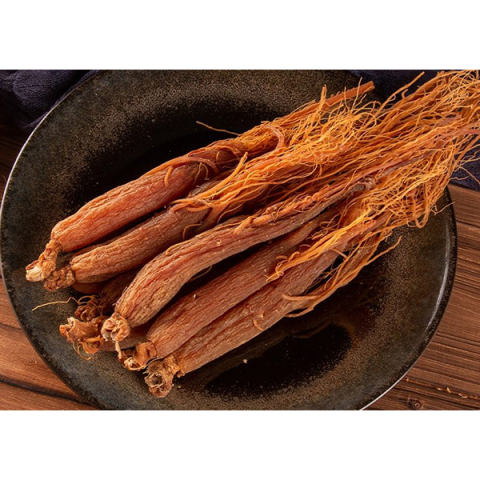
Red ginseng is the steamed and dried root and rhizome of the cultivated Panax ginseng C.A. Mey. (family Araliaceae). It is also called “red human ginseng” (红人参). It is made from cultivated ginseng roots through processes such as soaking, washing, grading, steaming, sun-drying, and oven-drying. Commercially, it is divided into two major categories: ordinary red ginseng and refined red ginseng, including forms such as whole-bearded red ginseng (全须红参) and smooth-branch red ginseng (光支红参).
Its main chemical constituents are saponins (ginsenosides), various sugars, etc. Warm in nature, it has the effects of greatly tonifying primordial qi (大补元气) and restoring yang and preventing collapse (回阳固脱). It is mainly indicated for patterns such as Lung deficiency cough, chronic diarrhea, and chronic dysentery. For sucking or chewing, it is recommended not to exceed 3 g per day.
It is suitable for yang-deficient and constitutionally weak individuals, especially for tonic use in autumn and winter. It can be combined with:
- 罗汉果 (Luo Han Guo, Monk Fruit)
- 枇杷叶 (Pi Pa Ye, Loquat Leaf)
to enhance the Lung-moistening effect.
Long-term oral use of red ginseng powder can lower tumor incidence and inhibit tumor growth. When formulated into tablets together with:
- 香茶菜 (Xiang Cha Cai, Rabdosia / Isodon herb)
- 枳壳 (Zhi Ke, Bitter Orange / Immature Bitter Citrus Fruit)
it can promote postoperative recovery and prolong survival in patients with gastric cancer. Red ginseng can improve cell-mediated immune function in gastric cancer patients after surgery and exerts effects on the nervous system and cardiovascular system.
Cultivation requires a cool, moist climate and is usually done by seed propagation with sowing in summer, autumn, or spring. Individuals with yin deficiency with heat, uncontrolled hypertension, pregnant women, and children under 14 years of age should use it with caution.
In 2024, the Kuai Da Ginseng Trading Market in Tonghua County (通化县快大人参交易市场) achieved a trading volume of 6.01 billion yuan, of which the e-commerce sales accounted for over 30% of the total ginseng product trading volume in Northeast China.
Overview (简介)
Red ginseng is made from high-quality fresh ginseng as raw material, processed through two steaming steps. During processing, because the roots are steamed at high temperature, hydrolytic enzymes such as hydrolases, amylases, and maltases in the root are denatured by heat. This both prevents the hydrolysis of ginsenosides and inhibits enzymatic starch hydrolysis, helping to preserve the nutritional components. Its color is reddish, and some roots may appear brownish-yellow.
Red ginseng is warm in nature, with a sweet and slightly bitter taste, and a strong, rich aroma. It has excellent functions of greatly tonifying primordial qi and restoring yang to prevent collapse. In common clinical patterns such as Lung deficiency cough, Spleen deficiency with chronic diarrhea or dysentery, Middle burner deficiency with cold in the stomach, Blood deficiency with dizziness, and Kidney deficiency with dyspnea, red ginseng can be chosen as a superior tonic to reinforce qi and supplement deficiency.
Names (释名)
Also known as:
- 黄参 (Huang Shen, Yellow Ginseng)
- 血参 (Xue Shen, Blood Ginseng)
- 人衔 (Ren Xian)
- 鬼盖 (Gui Gai)
- 神草 (Shen Cao, Divine Herb)
- 土精 (Tu Jing, Earth Essence)
- 地精 (Di Jing, Earth Spirit)
- 海腴 (Hai Yu)
- 皱面还丹 (Zhou Mian Huan Dan, “Wrinkled Elixir of Return”)
Properties and Taste (气味)
Root: sweet (甘), slightly cold (微寒), non-toxic (无毒).
(Note: this flavor/nature description is from classical sources and may differ from modern “warm” characterization of red ginseng.)
Main Therapeutic Uses (主治)
Below are classical therapeutic applications and formulas using ginseng (人参 / Ren Shen, Ginseng Root)—red ginseng is particularly suited when a strong qi-tonifying, yang-restoring effect is required.
1. Yin exhaustion with yang collapse
Symptoms: dizziness, spontaneous sweating, phlegm rattling in the throat, large but deficient pulse.
Prescription:
Use 人参 (Ren Shen, Ginseng) 10 liang, finely sliced. Soak in 20 bowls of water, then gently decoct over mulberry wood fire to a thick syrup.
- Each dose: 1–3 bowls
- Continue until the disease is cured
This formula is called “Ren Shen Gao (人参膏, Ginseng Syrup)”.
2. Focal fullness and hardness in the chest, rebellious qi from under the ribs rushing toward the Heart
Use:
- 人参 (Ren Shen, Ginseng Root)
- 白术 (Bai Zhu, Atractylodes macrocephala Rhizome)
- 干姜 (Gan Jiang, Dried Ginger Rhizome)
- 甘草 (Gan Cao, Licorice Root)
each 3 liang, decoct in 8 sheng of water until 3 sheng remain.
- Take 1 sheng per dose, 3 times daily.
This formula is called “Zhi Zhong Tang (治中汤)”, also known as “Li Zhong Tang (理中汤, Regulate the Middle Decoction)”.
3. Spleen–Stomach qi deficiency, poor appetite
Use:
- 人参 1 qian (Ginseng)
- 白术 2 qian (Bai Zhu, Atractylodes)
- 茯苓 1 qian (Fu Ling, Poria)
- 炙甘草 0.5 qian (Zhi Gan Cao, Honey-Fried Licorice)
- 生姜 3 slices (Sheng Jiang, Fresh Ginger)
- 大枣 1 piece (Da Zao, Jujube)
Add 2 cups of water and decoct to 1 cup. Take warm before meals.
This prescription is “Si Jun Zi Tang (四君子汤, Four Gentlemen Decoction)”.
(Note: in this version, the dosage relationships are not further adjusted.)
4. To open the Stomach and resolve phlegm
Use:
- 人参 (Ren Shen, Ginseng) 2 liang (roasted)
- 半夏 (Ban Xia, Pinellia Tuber) 5 qian, soaked in ginger juice and then roasted dry
Grind together into fine powder, mix with flour, and make pills the size of mung beans.
- Dose: 30–50 pills per dose
- Take with ginger decoction (姜汤)
- Take after meals, 3 times per day
Adding 陈皮 (Chen Pi, Aged Tangerine Peel) 5 qian may also be used.
5. Stomach cold with qi stagnation and fullness, hunger but inability to eat
Use:
- 人参 (Ginseng) 2 qian
- 生附子 (Sheng Fu Zi, Raw Aconite Root) 0.5 qian
- 生姜 (Fresh Ginger) 2 qian
Add 7 he of water, decoct to 2 he, then add the white of one egg and mix thoroughly.
Take on an empty stomach.
6. Stomach deficiency with nausea or vomiting with phlegm
Use:
- 人参 (Ginseng) 1 liang
Add 2 bowls of water and decoct to 1 bowl. Then add:
- 竹沥 (Zhu Li, Bamboo Sap) 1 cup
- 姜汁 (Ginger Juice) 3 spoonfuls
Take warm. This formula is especially suitable for the elderly.
7. Rebellious Stomach (Fan Wei 反胃: food comes back up immediately after ingestion, patient is weak)
Use:
- 人参 (Ginseng) 3 liang, sliced
Add 1 sheng of water and boil to 4 he. Drink hot. At the same time, use ginseng juice combined with:
- 鸡蛋白 (Ji Dan Bai, Egg White)
- 薤白 (Xie Bai, Allium macrostemon bulb)
to cook a millet congee and eat.
8. Pregnant woman with abdominal pain and sour regurgitation, unable to eat
Use equal parts:
- 人参 (Ginseng)
- 炮干姜 (Pao Gan Jiang, Dry-Fried Dried Ginger)
Grind into powder, mix with 生地黄汁 (Sheng Di Huang Zhi, Fresh Rehmannia Root Juice) to form pills the size of parasol tree seeds (梧桐子).
- Dose: 50 pills per dose
- Take with rice soup (米汤).
9. Yang deficiency with dyspnea, spontaneous & night sweating, shortness of breath, dizziness
Use:
- 人参 (Ginseng) 5 qian
- 熟附子 (Shu Fu Zi, Prepared Aconite) 1 liang
Divide into 4 packets. For each packet, use 10 slices of fresh ginger and 2 bowls of water. Decoction to 1 bowl and take warm.
10. Severe dyspnea close to collapse
Decoct powdered ginseng in water and take 1 teaspoon per dose, 5–6 times per day.
11. Postpartum asthma/dyspnea
Use:
- 人参末 (Ginseng Powder) 1 liang
- 苏木 (Su Mu, Sappan Wood) 2 liang
Decoct the sappan wood in 2 bowls of water to 1 bowl, then stir in the ginseng powder and take.
This has a marked effect.
12. Postpartum deficiency with fever and spontaneous sweating
Use equal parts:
- 人参 (Ginseng)
- 当归 (Dang Gui, Angelica Sinensis Root)
grind into powder. Separately, place in 3 sheng of water:
- 猪腰子 1 (Pig Kidney), sliced
- 糯米 half a he (Glutinous Rice)
- 葱白 2 stalks (Cong Bai, Scallion White)
Cook until the rice is done. Take 1 bowl of the broth and mix in the ginseng and dang gui powder, decoct briefly, and take warm before meals.
13. Postpartum constipation with heavy rectal bleeding
Use:
- 人参 (Ginseng)
- 麻子仁 (Ma Zi Ren, Hemp Seed)
- 枳壳 (Zhi Ke, Bitter Orange / Immature Bitter Orange Fruit), stir-fried with wheat bran
Grind together to a fine powder and mix with honey to form pills the size of parasol tree seeds.
- Dose: 50 pills per dose
- Take with rice soup.
14. Transverse or mal-presentation delivery (breech or obstructed labor)
Use equal parts:
- 人参末 (Ginseng Powder)
- 乳香末 (Ru Xiang, Frankincense Powder)
plus:
- 丹砂 5 fen (Dan Sha, Cinnabar)
Grind all together finely and mix with:
- 1 egg white
- 3 spoonfuls of fresh ginger juice
Stir well and take cold. It is said to have special efficacy.
15. Palpitations with spontaneous sweating due to heart qi deficiency
Use:
- 人参 (Ginseng) 0.5 liang
- 当归 (Dang Gui, Angelica Sinensis) 0.5 liang
- 阉猪腰子 1 pair (a pair of castrated boar kidneys), sliced
Decoct together and take on an empty stomach.
Afterward, dry the herb dregs and grind into powder, then mix with yam flour (山药末 Shan Yao, Chinese Yam Powder) to make a paste and form pills the size of mung beans.
- Dose: 50 pills per dose
- Take with jujube decoction (枣汤).
Frankincense (乳香 Ru Xiang) 2 qian can also be added to the prescription.
16. Lung deficiency with chronic cough
Use:
- 人参 (Ginseng) 2 liang
- 鹿角胶 (Lu Jiao Jiao, Deer Antler Glue), roasted 1 liang
Grind to powder.
- Dose: 3 qian per dose
- Take with Peppermint and Fermented Soy Decoction (薄荷豉汤).
17. Asthmatic cough with hemoptysis, weak and forceless pulse
Use:
- 人参末 (Ginseng Powder) 3 qian
Mix with egg white and take at daybreak, then lie flat without a pillow.
- If the illness is recent, one dose may suffice.
- In chronic cases, two doses have effect.
Using the egg white of a black-bone chicken egg (乌鸡蛋) is said to give even better results.
18. Vomiting blood and passing blood in stool, blood gushing like a fountain
Use:
- 人参 5 qian (Ginseng, roasted)
- 侧柏叶 (Ce Bai Ye, Biota Leaf), steamed then roasted
- 荆芥穗 (Jing Jie Sui, Schizonepeta Spike), charred to “retain nature”
each 5 qian. Grind together into fine powder.
Each time, take 2 qian of this powder mixed with 2 qian of flour, and stir with water into a thin gruel to drink.
19. Persistent nosebleed
Use equal parts:
- 人参 (Ginseng)
- 嫩柳枝 (Nen Liu Zhi, Tender Willow Twig)
Grind to powder.
- Dose: 1 qian per dose
- Take 3 times per day.
If willow twig is unavailable, 莲子心 (Lian Zi Xin, Lotus Seed Embryo) can be used instead.
20. Yin-deficient hematuria (blood in urine due to yin deficiency)
Use equal parts:
- 人参(焙) (Ginseng, roasted)
- 黄芪(盐水灸) (Huang Qi, Astragalus Root, roasted after soaking in saltwater)
Grind to powder. Separately, take:
- 红皮萝卜 (Hong Pi Luo Bo, Red-skinned Radish) 1 piece, cut into four slices and roasted with honey. Roast repeatedly until 2 liang of honey have been fully absorbed/used.
Each dose: dip 1 slice of radish into the powdered medicine and eat, then follow with warm salted water.
21. Polydipsia (thirst with excessive drinking)
Use ginseng powder mixed with egg white.
- Dose: 1 qian per time, 3–4 times daily.
Another formula: equal parts
- 人参 (Ginseng)
- 栝楼根 (Gua Lou Gen, Trichosanthes Root)
Grind raw into powder and mix with refined honey to form pills the size of parasol tree seeds.
- Dose: 100 pills per dose
- Take before meals with Mai Men Dong (麦门冬, Ophiopogon) decoction
- Twice daily.
This formula is called “Yu Hu Wan (玉壶丸, Jade Pot Pill)”.
Another formula:
- 人参 (Ginseng) 1 liang
- 甘草 (Gan Cao, Licorice Root) 2 liang, soaked in boar bile, then roasted
- 脑子 (Nao Zi, Animal Brain matter) 0.5 qian
Grind together, mix with honey into pills the size of foxnut seeds (Euryale ferox).
- Chew 1 pill each time, swallow with cold boiled water.
Another formula:
- 人参 (Ginseng) 1 liang
- 葛粉 (Ge Fen, Kudzu Root Starch / Pueraria Powder) 2 liang
Grind together into powder. At the same time, in pig soup 1 sheng (猪汤, pork broth), add 3 qian of this powder and 2 liang of honey, then simmer over low heat to make a paste.
- Each night, take 1 spoonful slowly in the mouth and swallow.
- Improvement is usually seen after three doses.
22. Chronic dysentery with fainting, six pulses deep and weak
Use equal parts:
- 人参 (Ginseng)
- 附子 (Fu Zi, Aconite Root)
each 1.5 liang.
Each time, take 0.5 liang, add:
- 生姜 (Fresh Ginger) 10 slices
- 丁香 (Ding Xiang, Clove) 15 pieces
- 粳米 (Jing Mi, Polished Rice) a pinch
Decoct in 2 bowls of water until 1.5 bowls remain. Take warm on an empty stomach.
23. “Locked-mouth dysentery” (禁口痢, severe dysentery with inability to open the mouth or extreme weakness)
Use:
- 人参 (Ginseng) 3 qian
- 莲肉 (Lian Rou, Lotus Seed) 3 qian
Decoct into a thick soup and sip slowly, swallow little by little.
You may also add 姜汁炒黄连 (Jiang Zhi Chao Huang Lian, Coptis Root stir-fried with ginger juice) 3 qian and decoct together.
24. Chronic deficiency dysentery in the elderly, with inability to eat
Use:
- 人参 (Ginseng) 1 liang
- 鹿角 (Lu Jiao, Deer Antler) 1 liang
- (second 鹿角 likely means) 鹿角霜 or 鹿角片 — “Deer Antler, peeled and roasted” 5 qian
Grind together into powder.
- Dose: 1 teaspoon per time
- Take with rice soup (rice gruel)
- Three times daily.
Administration – Suitability and Contraindications (服用宜忌)
Suitable (宜服)
Red ginseng is warm and has the power to stimulate and strengthen yang, particularly suitable for people with qi deficiency and yang deficiency, such as those who:
- often feel dizzy and have blurred vision
- have shortness of breath and lack of strength
- are elderly with declining vitality
- are weak in recovery after illness
- women with significant blood loss
- postoperative patients
It is especially appropriate to use in autumn and winter.
Contraindicated / Use with Caution (忌服)
People with:
- yin deficiency with hyperactive fire
- uncontrolled hypertension
should not take red ginseng. Patients with heart disease should consult a physician before use.
Those with yin deficiency who tend to develop “internal heat easily” (e.g., red and swollen gums, dry mouth and throat, easy nosebleed) are better suited to Xi Yang Shen (西洋参, American Ginseng) in summer, as it tonifies qi and nourishes yin, whereas red ginseng is warm and may aggravate internal heat in such individuals.
Dosage (用量)
For the average person, about 3 grams per day is considered appropriate.
Cultivation Methods (栽培方法)
Red ginseng (cultivated ginseng for red-ginseng processing) prefers a cool, moist climate and is cold-tolerant. It prefers indirect or diffuse light and dislikes strong sunlight and high temperatures. It has strict soil requirements, favoring well-drained, humus-rich sandy loam or loam.
Propagation is mainly by seed, with sowing in summer, autumn, or spring:
- Summer sowing (7–8th month): harvest fruits when ripe and sow immediately.
- Autumn sowing (November)
- Spring sowing (early–mid April)
Before sowing, plow and make raised beds:
- bed height: 0.7–1 chi (about 23–33 cm)
- bed width: 3.8–4 chi (about 1.3–1.4 m)
- work paths: 6–8 chi (about 2–2.7 m) between beds
Use broadcast seeding, about 1 liang of seed per square meter. Cover with 1–1.5 cun (about 3–5 cm) of soil, keep the soil moist. Seedlings emerge around early May.
For autumn and spring sowing, artificial stratification (sprouting induction) is necessary. The method:
- Dig pits 5–6 cun deep (size depending on seed quantity).
- Mix sand and seeds at a 1:1 ratio and place in the pit.
- Cover with 2–3 cun of soil.
- Keep the soil moist.
After about 2 months, when the seed coats crack, sow.
In the third year (October), transplant seedlings at row-spacing and plant-spacing of 6 × 3 cun. Cover with 1.5–2 cun of soil.
Before seedling emergence, build a shade shed:
- front eave height: 3–4 chi
- back eave height: 2–3 chi
During growth, diseases such as leaf spot, blight, and anthracnose may occur and can be controlled by spraying with Bordeaux mixture.


