
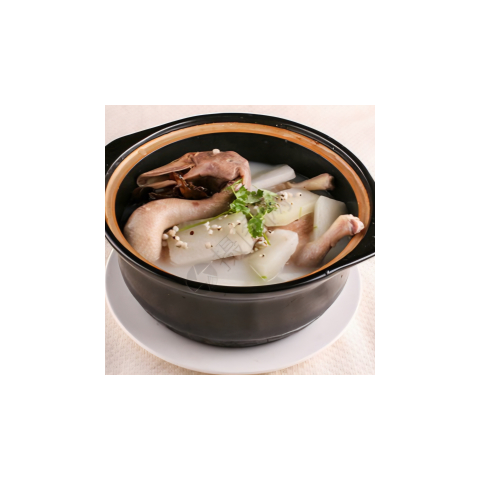

| Product name | Lotus Seed Winter Melon and Old Duck Nourishing Soup |
|---|---|
| Descripción | It clears internal heat, refreshes the body, relieves summer heat, eliminates excess dampness, strengthens the spleen, stimulates the appetite, and enhances skin hydration, helping maintain healthy and radiant skin |
| Price | MXN$450 |
| Order quantity |
|
| Sum |
Lotus Seed Winter Melon and Old Duck Nourishing Soup
(莲子冬瓜老鸭汤)
The Lotus Seed, Winter Melon, and Old Duck Nourishing Soup is a refreshing and highly nutritious traditional Chinese soup made with lotus seeds (莲子), winter melon (冬瓜), mature duck (老鸭), and lotus leaf (荷叶). This soup is especially beneficial during hot seasons, as it helps clear internal heat, cool the body, and improve digestion.
Traditional Chinese Medicine (TCM) Benefits
This nourishing soup clears internal heat, refreshes the body, relieves summer heat, and helps dispel excess dampness. It also strengthens the spleen, stimulates the appetite, and moisturizes the skin, helping maintain a healthy complexion.
Ingredients
- Lotus seeds (莲子) – 300g
- Winter melon (冬瓜) – 1000g
- Lotus leaf (荷叶) – 1 piece
- Dried tangerine peel (陈皮) – 1/2 piece
- Old duck (老鸭) – 1 whole
- Ginger (生姜) – 3 slices
Cooking Instructions
1. Preparation
- Wash lotus seeds, tangerine peel, and lotus leaf thoroughly. Remove the pith from the tangerine peel.
- Wash the winter melon and cut it into chunks without removing the skin.
- Clean the duck completely, removing the tail and internal organs.
2. Making the Soup
- Place all ingredients and ginger slices into an earthenware pot.
- Add 3000 ml (approximately 12 cups) of water and bring to a boil over high heat.
3. Simmer
- Once it reaches a boil, reduce to low heat and simmer for 2 hours.
4. Seasoning
- Add salt and a small amount of oil to taste before serving.
Cooking Tips
- Preparing the duck:
To reduce calories, it is recommended to remove the duck skin before cooking, as most of the fat is located beneath the skin. - Reducing gaminess:
Adding dried tangerine peel and ginger greatly helps remove the strong odor characteristic of old duck. - Ingredient combination:
Lotus leaf or jujube (good for tonifying the spleen) can be added to enhance flavor and benefits.
Consumption Precautions
- People with weak spleen and cold constitution:
Should avoid excessive consumption, as winter melon is cooling and may worsen diarrhea. - Kidney deficiency (腎虛) individuals:
Should consume with caution as cold foods may aggravate symptoms. - Avoid certain food combinations:
Unless used to treat edema, avoid combining this soup with strong diuretic foods such as red beans (adzuki) to prevent excessive fluid loss.
Overall Benefits
The combination of lotus seeds, winter melon, and mature duck produces a clear, mild-flavored soup that cools the body, dispels dampness, strengthens the spleen, enhances appetite, and nourishes the skin.
Lotus Seeds (莲子)
Lotus seeds, commonly used in East Asian cuisine, are also widely valued in herbal medicine. They strengthen the spleen, tonify the kidneys, and calm the mind. Commercial lotus seeds are usually sold dried and come in two types:
- Red lotus seeds (with skin): Better for nourishing blood and improving complexion
- White lotus seeds (skin removed): Softer texture and better for strengthening the spleen
They can be used in porridge, soups, desserts, or brewed as tea after removing the bitter lotus germ.
Nutritional Benefits
- Strengthens the spleen, stops diarrhea, tonifies the kidneys, and stabilizes essence
- Calms the mind (helps with palpitations, insomnia, irritability)
- Restores vitality with protein, carbohydrates, vitamins, and minerals
- Contains compounds with anti-cancer effects
- The lotus germ contains alkaloids with heart-strengthening and blood pressure–lowering effects
How to Consume
- Lotus seed porridge or soups
- Remove lotus germs for people with weak or cold spleen
- People with a normal or heat-prone constitution can consume with the germ, especially in summer
- Raw lotus seeds are mentioned in ancient texts as effective, but may cause bloating—avoid if digestion is weak
Precautions
- Not suitable for people with dry stools or postpartum women in large amounts
- High in natural sugars—diabetic individuals should limit intake
- Should not be consumed with seafood to avoid digestive discomfort
Lotus Leaf (荷叶)
The lotus leaf is the dried leaf of the lotus plant and has significant medicinal, culinary, and cultural value. Its famous hydrophobic “self-cleaning lotus effect” is well known.
Characteristics
- Shape: Round shield-like leaves rising above the water surface
- Hydrophobic: Micro–nano structures cause water droplets to bead and roll off, removing dust
- Growth: Prefers warm, breezy environments and shallow water
Medicinal Benefits
- Clears summer heat and relieves thirst
- Drains dampness and strengthens the spleen
- Lifts yang and stops bleeding
- Reduces lipids and aids weight loss
(Alkaloids & flavonoids help inhibit fat absorption and promote fat breakdown)
Culinary and Daily Uses
- Lotus leaf tea (popular for weight loss; best taken 1–2 hours before meals)
- Lotus leaf porridge or lotus leaf rice
- Medicinal recipes, such as lotus leaf with hawthorn or cassia seeds
Cultural Significance
- Symbol of purity and noble character:
“Grows out of mud yet remains unstained.” - Represents harmony and good fortune due to auspicious homophones
- Featured widely in poetry and art
(e.g., “The endless green of lotus leaves meets the sky, while lotus blossoms glow red under the sunlight.”)


